8 November 2026
From Port Vell to Diagonal Mar: two ways to live by the sea in Barcelona
Barcelona has more than one seafront. The old harbour of Port Vell and the open beaches of Diagonal Mar offer two very different ways of living by the sea, and each suits a different life.
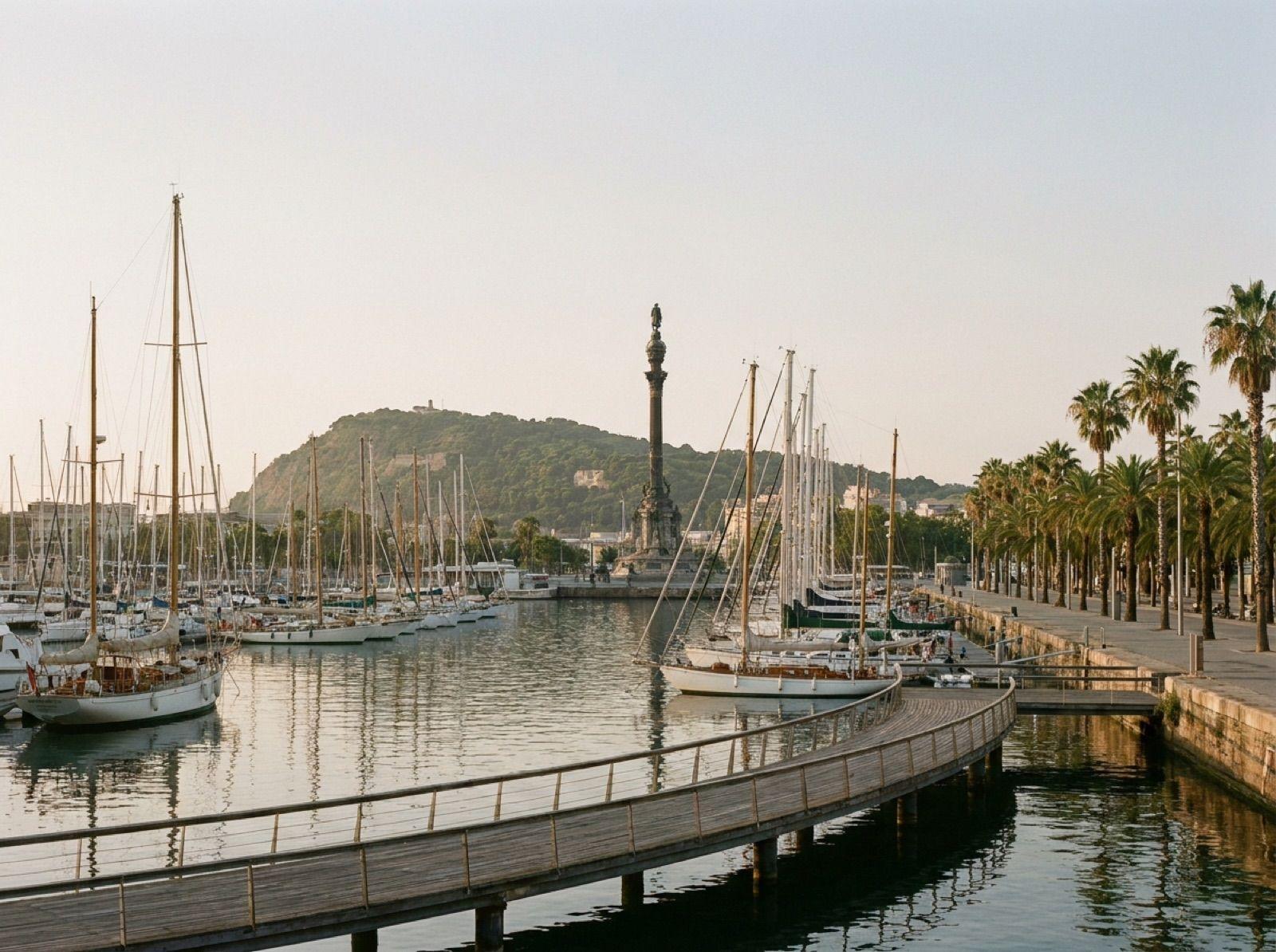
Living by the sea in Barcelona can mean two quite different things. Port Vell is the old harbour: boats, promenades and the historic centre at your back. Diagonal Mar, at the other end of the seafront, is open beach, wide avenues and parks, with newer buildings and larger terraces. Both face the Mediterranean; they suit different lives.
The history of how the city opened up to the sea is in Reading a neighbourhood: Barcelona's districts. Here we look at what each place is like to live in.
What is it like to live in Port Vell?
Port Vell occupies the oldest part of the port of Barcelona. For most of the 20th century it was closed to the city; in 1981 the Moll de la Fusta was opened to residents, the first time in more than seventy years. The architect Manuel de Solà-Morales then turned it into a palm-lined promenade along the water, and the 1989 Special Plan for Port Vell, with the 1992 Olympics on the horizon, opened the rest of the harbour to public life.
Today, living here means harbour light and moored boats outside the window, with the Born and the Gothic Quarter a few minutes' walk away: the markets, the narrow streets, Santa Maria del Mar. It is the seafront for those who want the old city close.
Our Penthouse with sea views in the Port of Barcelona is a duplex with a private 84 m² terrace, a jacuzzi and panoramic views over the harbour. Just behind the port, in the Gothic Quarter, we recently sold a modern flat with parking, a reminder of how close the old city is to the water.
What is it like to live in Diagonal Mar?
Diagonal Mar is the newer seafront, at the north-eastern end of the city. Its heart is the Parc de Diagonal Mar, designed by Enric Miralles and Benedetta Tagliabue and opened in 2002, where water runs through almost every part of the park. Nearby stand the Fòrum building by Herzog & de Meuron, now the Museu Blau, and Llevant beach, completed in 2006, which in summer even has an area set aside for dogs.
Life here is quieter and more residential. Buildings are newer, many with large terraces facing the sea, and the beach is a walk from home rather than a destination.
In the Illa de Mar development we currently offer a 3-bedroom apartment with a 69 m² terrace, sold with a rental licence. In the same development we recently sold a 3-bedroom apartment with a 70 m² terrace.
Port Vell or Diagonal Mar: how do they compare?
- Character. Port Vell: a working harbour turned promenade, historic. Diagonal Mar: open beach and parks, contemporary.
- Neighbours. Port Vell: the Born, the Gothic Quarter, Barceloneta. Diagonal Mar: Poblenou, the 22@ district, the Fòrum.
- Buildings. Port Vell: older buildings and rare penthouses. Diagonal Mar: newer developments with large terraces.
- Pace. Port Vell: lively, close to the centre. Diagonal Mar: calmer, more residential.
Choosing your side of the sea
Neither is better; they answer different questions. Some of our clients want to step out onto the old city; others want to step onto the sand. The difference is easier to feel than to describe, which is why we prefer to walk both with you.
If a home by the sea in Barcelona is what you are looking for, we would be glad to show you.
Frequently asked questions
Where can you live by the sea in Barcelona?
Along the whole city seafront, from Port Vell and Barceloneta in the south-west to Diagonal Mar in the north-east. Port Vell is closest to the historic centre; Diagonal Mar has the newest buildings and quieter beaches.
Is Diagonal Mar a good area to live?
It suits those looking for a calm, residential seafront, with parks, newer buildings with terraces and Llevant beach nearby.
When did Port Vell open to the city?
In 1981, when the Moll de la Fusta was opened to residents; the 1989 Special Plan for Port Vell later transformed the rest of the harbour.